Bioethanol
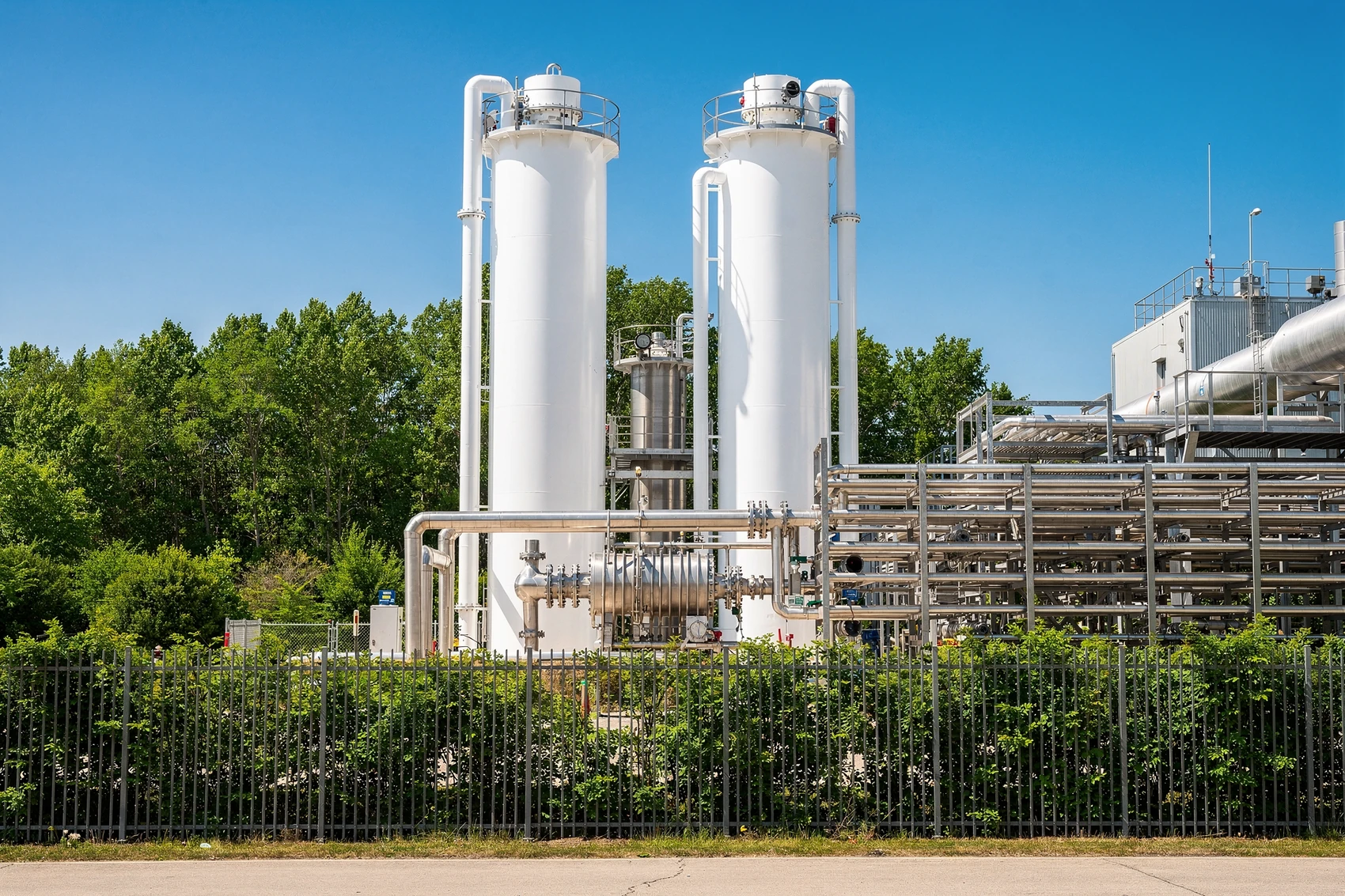
A fermentation vent is close to pure CO2, which makes it one of the cheapest streams to capture anywhere.
Bioethanol, biomass power, waste incineration, pulp mills and sugar emit carbon that was in the atmosphere last season, not a hundred million years ago. The plant already pulled it down for you.
Cut a biogenic stream to zero and you have stopped adding. Send it a kilometre underground instead and the tonne leaves the cycle for good. It is the one case where storage does not take you to neutral, it takes you past it.
A fermentation vent is close to pure CO2, which makes it one of the cheapest streams to capture anywhere.
The carbon came out of the air within the last growing cycle, so storing it is a removal.
A large share of municipal waste is biogenic, and that share counts below zero once it is stored.
Process emissions that are almost entirely biogenic, already concentrated at one stack.
How we use it